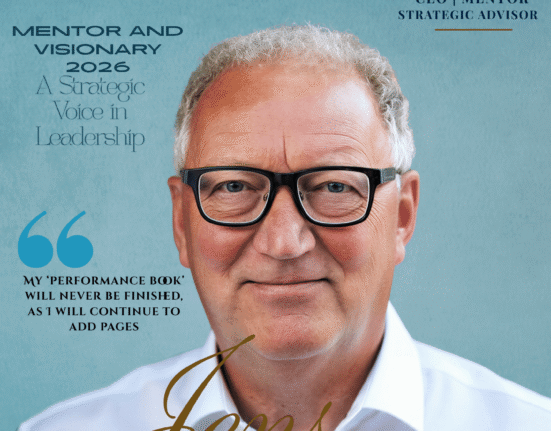


Building Brands with Patience, Purpose, and People: James Espey’s Enduring Philosophy of Leadership and Global Success
In an era where business success is often measured by speed, visibility, and short-term results, leaders who believe in patience, human connection, and long-term vision have become increasingly rare. Yet for James Stuart Espey, those values have never gone out of style. Over the course of a remarkable career in the global alcohol industry, he has built not only internationally recognized brands but also a leadership philosophy grounded in humility, resilience, and respect for people.
Today, as Chairman of James Espey & Associates Ltd., James reflects on a journey shaped as much by personal adversity as by professional achievement. His story is not simply about business growth or commercial success—it is about discipline, perspective, and the belief that sustainable success is always built over time.
A Childhood That Shaped Resilience
Long before he became a respected global business leader, James experienced challenges that would quietly shape the way he approached life and leadership.
Born to parents living in Northern Rhodesia, his early childhood changed dramatically when his parents divorced while he was still very young. At just seven years old, he was sent to boarding school in Cape Town, where he would spend the next ten and a half years away from home.
The distance was immense in every sense of the word. “The return journey was eight days and nights by train,” he recalls, “and I only saw my family twice a year.”
For many children, such an experience could have been deeply isolating. But for James, boarding school became a place where he developed discipline, independence, and emotional strength. Sport gave him confidence and belonging, while academic achievement instilled a sense of focus and perseverance.
“Boarding school taught me discipline and respect,” he says simply—two qualities that would later become central to his leadership philosophy.
The Decision That Changed Everything
James began his professional career in the grocery trade, but it wasn’t long before he realized he wanted more from his future. Having already earned a BCom degree in Marketing and Accounting in 1965, he made a bold and risky decision a few years later that would transform his life.
In 1968, he borrowed money to pursue an MBA.
At the time, it was not an easy or guaranteed choice. Yet looking back, James describes the MBA as the true accelerator of his career—not simply because of the qualification itself, but because of the confidence it gave him.
“The MBA was the accelerator which gave me confidence and belief in looking positively to the future,” he explains. “Nothing ventured, nothing gained.”
That willingness to take calculated risks became a defining part of his approach to business. Throughout his career, James would go on to build and develop brands across global markets, always guided by long-term thinking rather than immediate rewards.
Building Brands That Last
For James Espey, creating a successful brand has never been about chasing trends or focusing solely on financial targets. Instead, he believes lasting brands are built through patience, storytelling, and a deep understanding of consumers.
“I believe there is only one boss in business,” he says. “And that is the customer who votes with his or her feet.”
It is a perspective shaped by decades of real-world experience. In his view, too many professionals become distracted by bureaucracy, internal politics, or personal ambition, losing sight of the people they ultimately serve.
James believes successful brands require far more than marketing strategies. They need authenticity, emotional connection, and teams united by a shared vision. “When you create and build brands, you need patience and tenacity built around a great product with a story that will appeal to consumers,” he explains.
Equally important, he says, is surrounding yourself with the right people.
“It is essential to build a great team who share your vision to help you achieve your goals.”
Why Leadership Still Comes Down to People
While technology continues to transform industries at an unprecedented pace, James remains convinced that leadership is, above all else, a human endeavor.
Over the years, he has observed significant changes in workplace culture and leadership priorities. Yet he believes many modern leaders have become too focused on short-term financial performance rather than sustainable growth.
“Too many modern leaders are short-term thinkers motivated by short-term financial goals,” he says.
For James, real leadership requires patience, perspective, and collaboration. One of his favorite interpretations of teamwork captures this philosophy perfectly: “TEAM stands for ‘Together Everyone Achieves More.’”
Despite the rise of digital communication and remote business culture, he strongly believes that meaningful relationships are still built face-to-face. While technology is valuable, he views it as complementary rather than a replacement for human interaction.
“I often say, ‘ditch Zoom and get in the room,’” he shares. “It is always about people.”
That belief has guided his approach throughout his international career. Whether building brands in new markets or developing business partnerships across cultures, James emphasizes the importance of respect, personal connection, and cultural understanding.
Whenever he entered a new country, he made an effort to learn local words and embrace local traditions. “When you do that,” he explains, “it is important to have enormous respect for the local culture.”
For him, business success and human respect go hand in hand.
Lessons in Patience and Long-Term Thinking
One of the most striking aspects of James Espey’s philosophy is his unwavering commitment to long-term thinking in a world increasingly obsessed with instant success.
He warns young entrepreneurs against becoming overly dependent on short-term rewards and rapid growth. Bonuses, he says, may be useful, but they should never become the foundation of one’s lifestyle or ambition.
“Never live on your bonus,” he advises candidly.
Instead, he encourages professionals to focus on building something meaningful and sustainable—even when the process takes far longer than expected.
“When you build a new brand,” he says, “it usually takes twice as long and twice as much money as you ever thought to break even. Can you last the journey?”
It is not just practical advice—it is a reflection of how he has approached life itself: with resilience, patience, and an understanding that worthwhile achievements rarely happen overnight.
Mentorship, Legacy, and the Future
As someone who has spent decades leading teams and mentoring professionals, James believes leadership is not about ego but about creating opportunities for others to grow.
“As a Chief Executive, it is ideal to employ very bright people and don’t focus on your own ego,” he says.
He also believes mentorship is essential for shaping the next generation of leaders—particularly in a world that often prioritizes visibility over wisdom.
“Never forget,” he adds, “if you never leave the shore, you will never reach the other side.”
Looking ahead, James remains optimistic about the future of global business, provided leaders remain focused, patient, and culturally aware. While the world has become increasingly interconnected, he believes businesses must still grow thoughtfully and deliberately.
“You can’t put one slice of butter on ten pieces of toast,” he says with characteristic clarity.
The message behind the metaphor is simple but powerful: focus matters.
A Legacy Built on Respect and Human Connection
James Espey’s journey is a reminder that true leadership is not built through shortcuts or headlines. It is built quietly over time—through discipline, resilience, teamwork, and respect for people.
In a fast-moving business landscape increasingly shaped by technology and immediacy, his philosophy feels refreshingly grounded. Success, in his view, is not simply about ambition. It is about endurance, relationships, and the ability to remain human while building something meaningful.
And perhaps that is why his story continues to resonate across generations and industries alike.