
Bridging Ancient Wisdom and Modern Medicine: Dr. Huang Wei Ling’s Vision for the Future of Integrative Healthcare
Medicine has always moved forward by questioning established thinking. Throughout history, many of its most significant advances have come from physicians willing to look beyond accepted boundaries and challenge prevailing assumptions. As healthcare faces rising rates of chronic disease, immune-related disorders, and increasingly complex patient needs, that tradition of inquiry has taken on fresh relevance. The question is no longer simply how existing treatments can be improved, but whether modern medicine should broaden its perspective altogether.
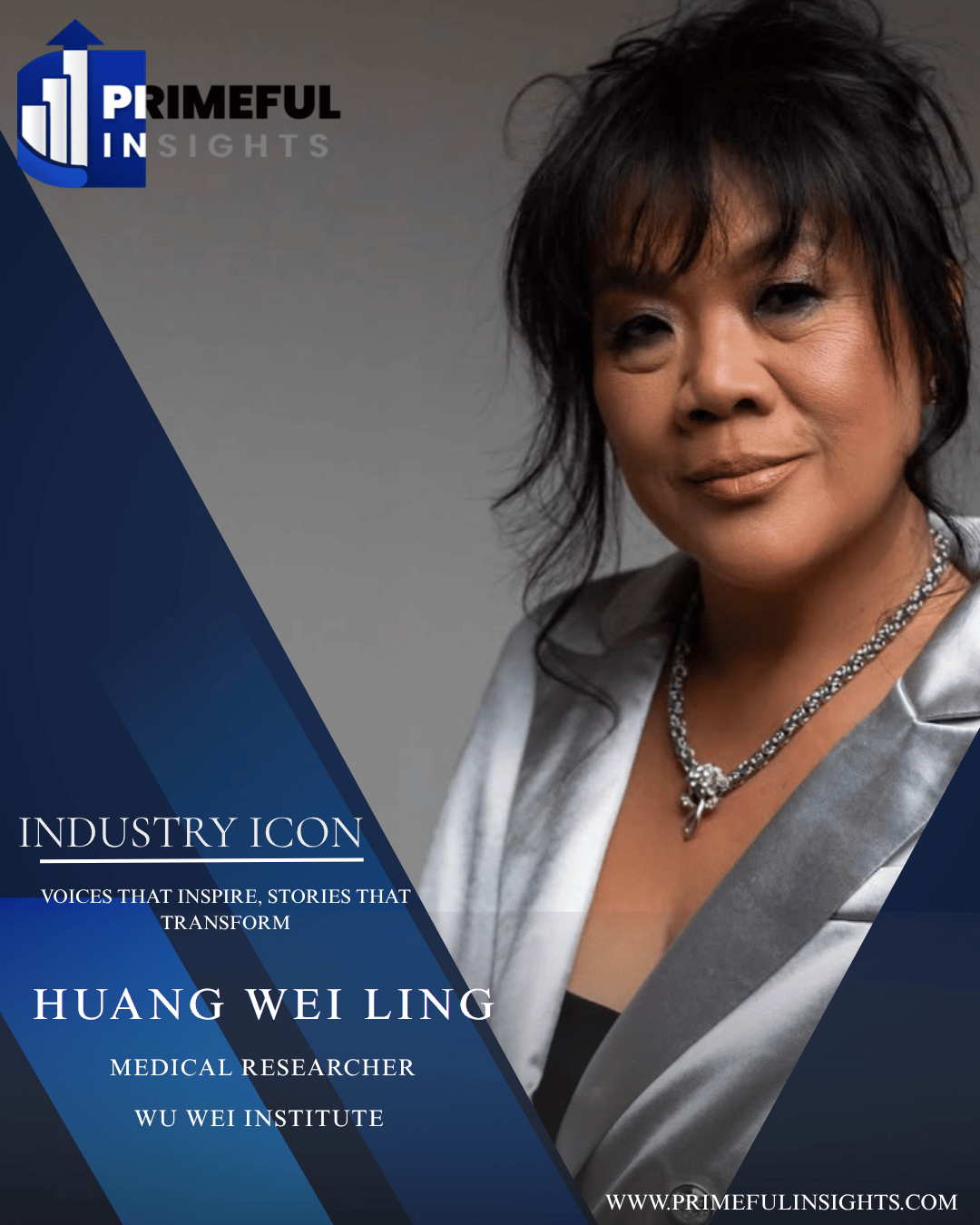
Among those advocating for a more integrative approach is Dr. Huang Wei Ling, Medical Researcher at the Wu Wei Institute. Over more than three decades of clinical practice, she has dedicated her career to bringing together Western medicine, Traditional Chinese Medicine, acupuncture, herbal medicine, and nutritional therapy. Her work is grounded in the belief that a fuller understanding of both the visible and less visible dimensions of health can offer new ways of thinking about disease prevention and patient care.
A Journey Shaped by Curiosity and Determination
Born in Taiwan and raised in Brazil after her parents immigrated in search of better opportunities, Dr. Huang’s path into medicine was anything but conventional. She grew up in a family with no medical background and initially planned to study Computer Science before discovering a different calling.
“I always say that even though I had to work while studying, it did not prevent me from being accepted into one of the most competitive medical schools in Brazil,” she recalls.
After graduating, she specialised in Infectious and Parasitic Diseases and entered the profession during the early years of the AIDS epidemic. Treating patients with severe opportunistic infections exposed her to the limits of the therapies available at the time and deepened her determination to look for broader approaches to care. A pivotal moment came when her mother encouraged her to study Traditional Chinese Medicine. Pregnant with her first child, Dr. Huang travelled nearly 500 kilometres every weekend to attend classes in São Paulo. What began as an interest in acupuncture gradually expanded into Chinese Herbal Medicine and Dietary Therapy, providing a framework that fundamentally changed the way she viewed health and disease.
Looking Beyond the Symptoms
Over the years, Dr. Huang became convinced that many illnesses cannot be fully understood through their physical manifestations alone. She often illustrates her philosophy with the image of a tree.
“Western medicine diagnoses and treats the visible part of the tree, the branches and leaves. Traditional Chinese Medicine studies the roots.”
To Dr. Huang, these are not competing philosophies but complementary perspectives on different stages of the same process. While modern medicine excels at diagnosing established disease, she believes traditional medical systems place greater emphasis on functional and energetic imbalances that may precede physical illness. That way of thinking became the foundation for decades of clinical observation, research, and patient care, eventually leading her to develop her own integrative treatment methodology.
Questioning Conventional Thinking
Presenting ideas that differ from established practice has inevitably invited scepticism. Dr. Huang has never regarded that as a reason to step back. Instead, she sees it as an opportunity to encourage scientific discussion. Through international conferences, published research, and educational initiatives, she has consistently challenged healthcare professionals to examine broader questions about disease development and patient care.
“The greatest barrier today is not technological but conceptual,” she says. “Changing the way we think requires open dialogue, continuous education, and the willingness to explore perspectives that may have been overlooked.”
Her work reflects the conviction that medicine should continue evolving rather than becoming confined by long-standing assumptions.
Developing the Wu Wei Protocol
After thirty-four years of clinical practice, Dr. Huang developed the Wu Wei Protocol, now patented in both Brazil and several other countries.
According to her, the protocol combines principles drawn from Western medicine, Traditional Chinese Medicine, Homeopathy, and nutritional approaches within a single clinical methodology. Its purpose is to address what she considers the earliest stages of disease development while supporting overall health through an integrative model. Although her ideas continue to generate discussion within the medical community, her objective has remained consistent: encouraging physicians to look beyond isolated symptoms and consider the patient as a whole.
Education as a Mission
For Dr. Huang, research is only one part of the equation. Education has become equally central to her life’s work. Since 2007, she has presented at international scientific conferences, published hundreds of scientific papers across multiple medical specialties, and established postgraduate education through the Wu Wei Methodology. Her aim is to encourage healthcare professionals to broaden their clinical perspective while embracing lifelong learning.
“It is not possible for any physician to learn everything during a single lifetime,” she says. “Medicine requires lifelong learning, humility, and continual reflection.”
That philosophy reflects a principle she frequently attributes to Hippocrates: that medical knowledge should be revisited and expanded as science continues to advance.
The Future of Integrative Healthcare
Dr. Huang believes healthcare will continue moving towards more comprehensive models that combine scientific progress with insights drawn from centuries of medical tradition. She does not view the future as a choice between Western medicine and ancient healing systems. Instead, she envisions closer collaboration across disciplines, allowing physicians to consider the physical, nutritional, emotional, and functional dimensions of health together.
In her view, medicine progresses by expanding existing knowledge rather than replacing it. She also believes medical education will continue to evolve as new research encourages practitioners to explore broader approaches to diagnosis, prevention, and patient care.
A Message for the Next Generation
When speaking to young physicians and researchers, Dr. Huang offers advice rooted in humility.
“Everything you learn in medical school is extremely important,” she says. “But it represents only one part of the knowledge you will need throughout your professional life.”
She encourages future healthcare professionals to remain curious, question established ideas, and commit themselves to continuous learning. For Dr. Huang, the responsibility of a physician extends beyond mastering current knowledge. It also means remaining open to new discoveries while keeping the patient’s well-being at the centre of every decision.
Building Tomorrow’s Medicine
Whether one agrees with all of her clinical perspectives or believes they warrant further investigation, Dr. Huang Wei Ling’s work reflects a sustained commitment to questioning assumptions, bringing together insights from different medical traditions, and exploring new ways to understand human health. Her career serves as a reminder that medicine has always advanced through inquiry, careful observation, and a willingness to explore unfamiliar paths. As healthcare responds to increasingly complex global challenges, thoughtful dialogue and collaboration across disciplines will remain essential in shaping the future of patient care.
For Dr. Huang, the future of medicine begins with one fundamental belief: healthcare must continue evolving because the people it serves are constantly changing. She believes that modern life, particularly the rapid advancement of communication technologies, is influencing the body’s internal energy balance in ways medicine is only beginning to understand. In her view, these changes have important implications for human immunity and overall health, making it essential for physicians to expand their perspective rather than rely exclusively on conventional treatment models. By bringing together a deeper understanding of the body’s energetic systems with the advances of modern medical science, she believes healthcare can respond more effectively to today’s challenges while preserving the vital energy that supports long-term well-being. For Dr. Huang, the principle is straightforward: medicine must never cease paying attention to the changes affecting human beings, particularly during this period of profound global transformation experienced over the last twelve years, which she describes as the “New Global Immunodeficiency.” Adapting to these invisible energetic shifts is now of paramount importance in order to avoid complications and tailor medications to the physiology of the modern human being, thereby maintaining better health and achieving more positive outcomes.
www.huangweiling.com.br